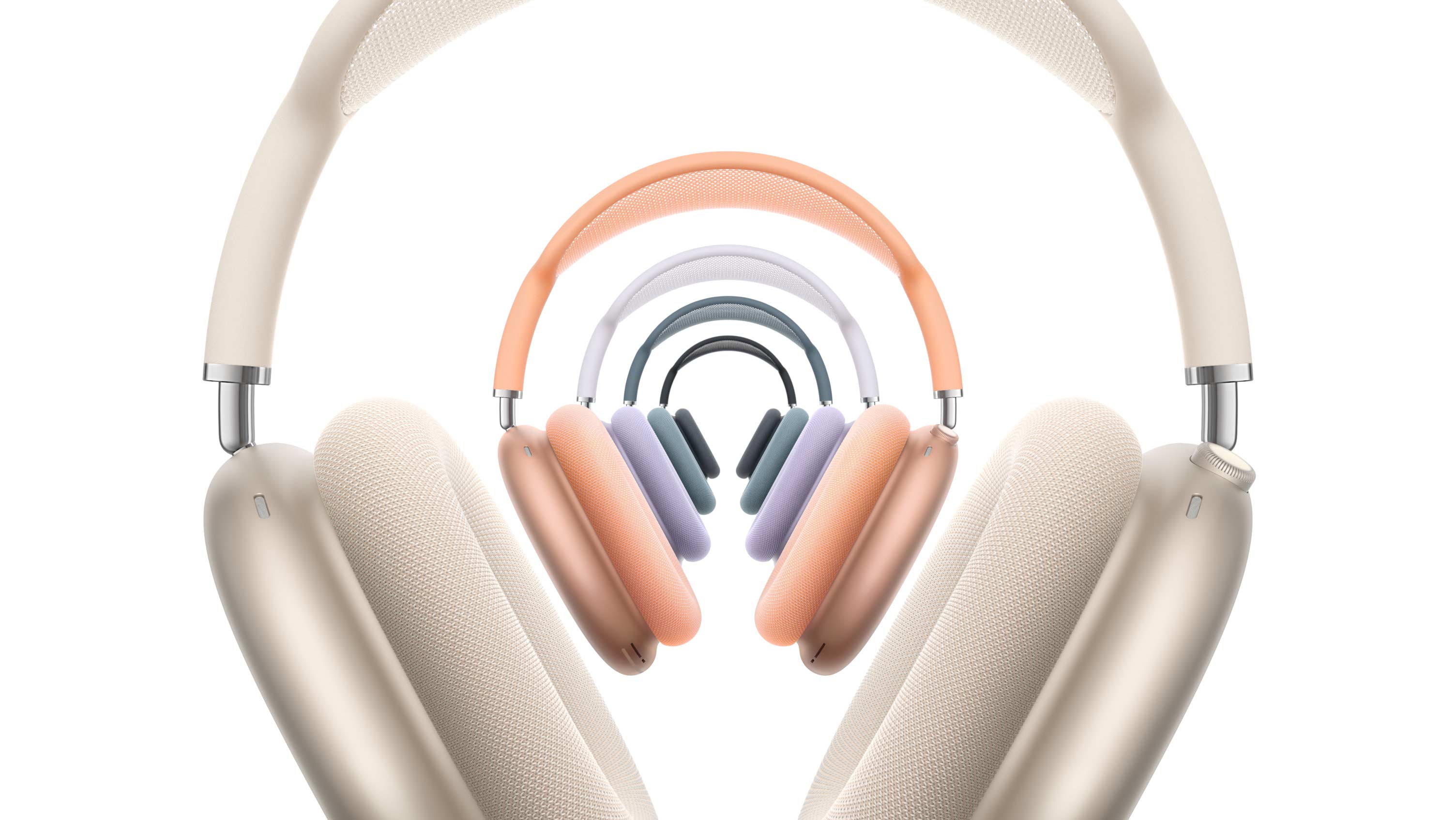
I unboxed these next to my partner's first-gen Lightning pair, expecting to feel a difference. I did not. Same cold aluminum cups, same fabric mesh headband that genuinely is the most comfortable part of any headphone I own, same case that everyone in my office has now openly called a bra. The only physical change is the port on the right cup, and the only audible change shows up when I plug into my Mac.
That wired path is the actual news. USB-C from the laptop to the cups gets you bit-perfect lossless from Apple Music, and on familiar tracks I can hear the top end open up a little compared to Bluetooth AAC. It is not a night-and-day thing. It is the kind of thing where, a week in, I caught myself reaching for the cable on purpose when I was sitting at the desk. That is a recommendation, just a quiet one.
The noise cancellation is still the best argument for the product. On a flight to Denver the engine drone disappeared in the way it does on the Bose QC Ultra, and the transparency mode is the only one I trust enough to leave on while talking to a barista without taking the headphones off. Inside the Apple ecosystem the handoff between my phone, my laptop, and the Apple TV is genuinely seamless in a way I cannot get from a Sony or a Sennheiser, and spatial audio on a movie at night holds up.
The complaints are the ones every reviewer has been making since 2020 and Apple has decided not to fix. 386 grams is heavy, and on a four-hour writing session I feel it on the crown of my head. There is no power button, which means if you forget to put them in the case they will quietly drain for hours sitting on your desk. There are no folding hinges, so the case is the size of a small clutch and protects almost none of the headphone. And over Bluetooth you are still locked to AAC and SBC, which is a strange place for a $549 product to be in 2026 when a $200 Audio-Technica can do LDAC.
The upgrade math is simple. If you own the Lightning pair, do not buy these. The USB-C port is not worth $549. If you live in iOS and macOS and you have been waiting for a reason to finally get a pair, the wired lossless is a small reason on top of a long list of reasons that already existed. If you do not live in the Apple ecosystem, you are buying the badge, and at this weight and price the badge is the wrong thing to buy.
The one place I have come around on these is the build. After two years of plastic cans cracking at the headband, the steel-and-aluminum construction looks the same as it did the day I unboxed it. Whether that justifies double the price of a Sony WH-1000XM5 is a personal question. For me, on a desk, indoors, hooked into a Mac, the answer has tipped toward yes. On a plane, in a backpack, all day, the answer is still no.
Verdict: Buy these if you live in Apple's world, you mostly listen at a desk, and you want the wired lossless path. If you carry headphones every day, get a Sony WH-1000XM5 and keep the difference.