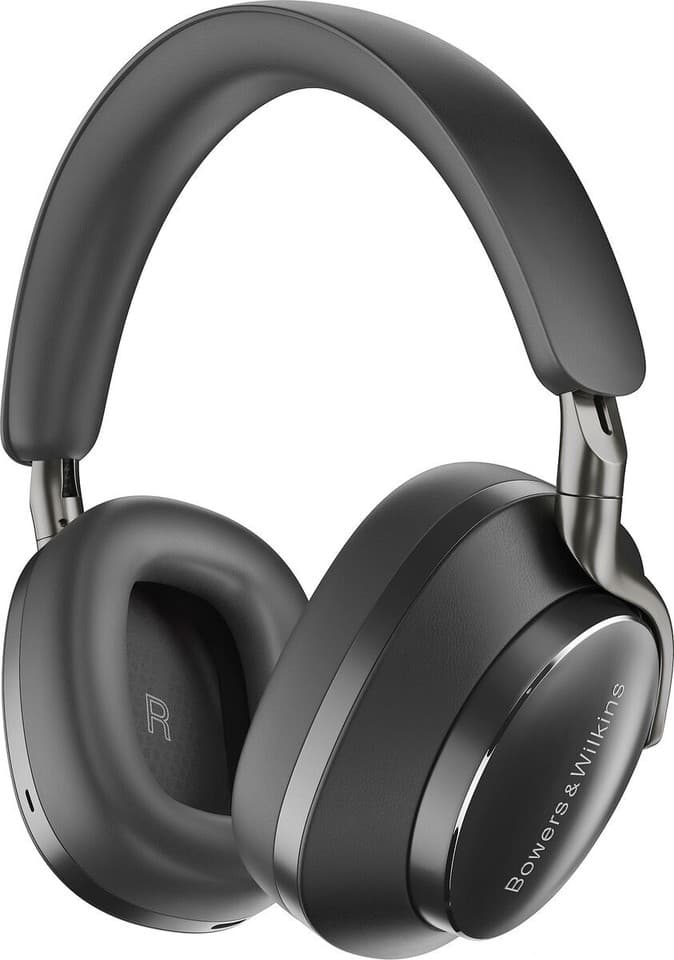
These came out of the box smelling like a new car seat. The pads are wrapped in Nappa leather, the yokes are machined aluminum, and the carrying case is the only headphone case I own that I would willingly leave on a coffee table. If you have ever owned a piece of British hi-fi gear, the Px8 feels exactly like one: heavier than it needs to be, finished better than the competition, and priced like the company knows you have already made the decision.
The sound takes a few hours to make sense of. Out of the box the bass shelf is generous to the point of cartoonish, the mids are slightly recessed, and the treble has a sparkle that on poorly mastered tracks tips into harsh. After about two days of listening I stopped describing it as wrong and started describing it as a choice. It is a fun tuning. It is not a neutral tuning. On a Massive Attack record it is fantastic. On a string quartet it is doing things the composer did not ask for.
The noise cancellation is where the £700 starts to feel optimistic. Roughly 83 percent measured reduction, which is fine for a coffee shop and adequate for a flight, but the deep sub-90Hz rumble from a jet engine sneaks through in a way it does not on a Bose QC Ultra. If you bought these expecting silence, you bought the wrong headphone. If you bought these expecting build, you bought the right one.
The USB-C path is a genuine reason to consider these over a cheaper rival. There is a real DAC inside the cups doing 24-bit DSP, which means you can plug the Px8 into a laptop and bypass Bluetooth entirely. On a long writing session at the desk I switched between the wired and wireless modes and the wired path is meaningfully cleaner — tighter bass, more separation between instruments, the kind of thing you stop hearing the moment you go back to AAC. Aptx Adaptive and aptx HD are there for Android over Bluetooth, multipoint pairs to two devices, and the analog 3.5mm path requires their cable to work.
Battery is honest. Over forty hours in standardized testing, and I have gone two weeks of office use without charging. A fifteen-minute top-up gets you most of a long flight.
The complaints stack up the moment you stop admiring the construction. At 320 grams the Px8 is heavy enough that I feel it after about three hours, especially on the crown. The illuminated B&W logos on the outside of the cups are larger than they need to be and announce the brand to a degree that feels gauche on a video call. There is no sweat resistance, so the leather pads will stain if you wear them at the gym. And the price comparison is the one Bowers does not want you to do: the PX7 S3, from the same company, costs less than half and sounds nearly as good with the same codec support and similar ANC.
This is the headphone you buy when the way it looks on your desk matters as much as the way it sounds on your head. That is a real reason. It is just not the reason most people are shopping.
Verdict: Buy the Px8 if the build and the leather are part of the appeal and the price has already stopped bothering you. If you want comparable performance for less than half the money, the PX7 S3 from the same brand is the smarter buy.