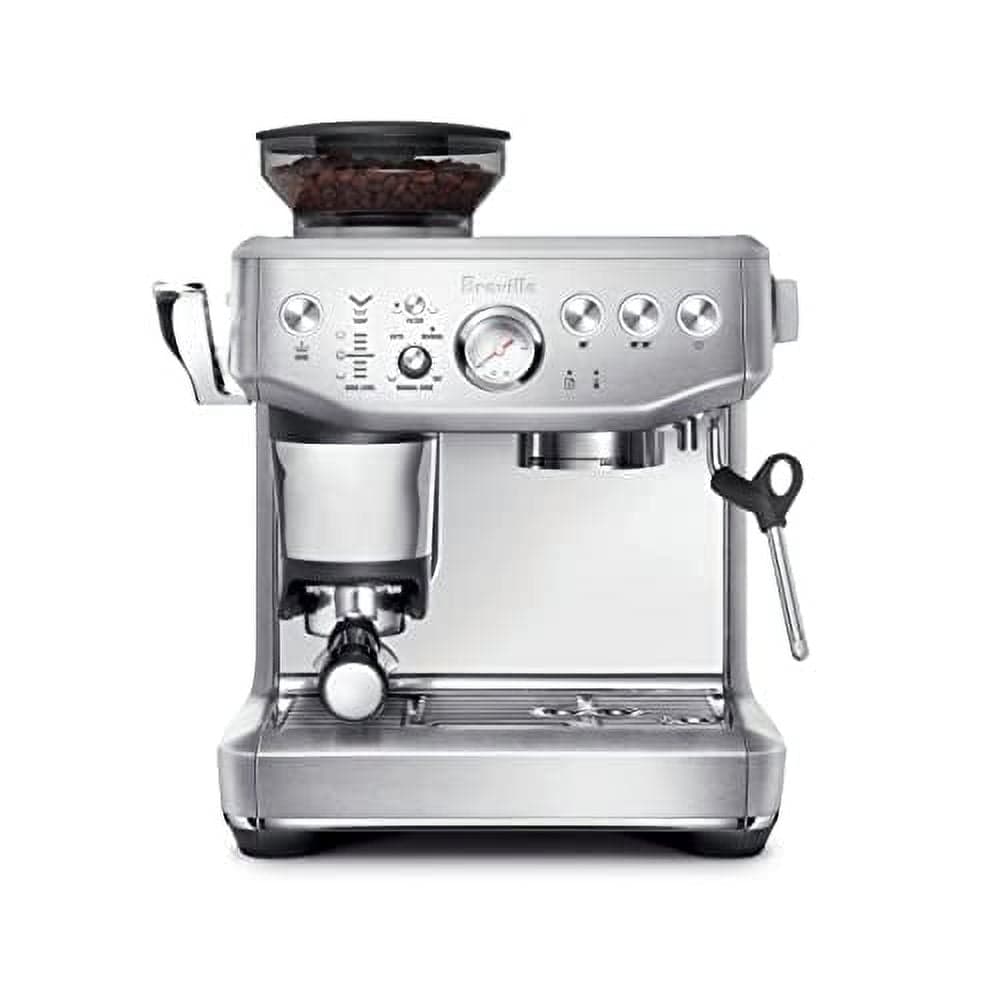
I have made bad espresso on a lot of machines. Channeling, under-extraction, the weak sour shot that tastes like wet bread — I have done all of it, repeatedly, on three different machines before this one. The Breville Impress is the first one where my fourth shot of the morning was reliably better than my first, instead of identically mediocre.
The reason is the tamping arm. Most espresso problems trace back to two steps: dosing the right amount of grounds, and tamping them flat with the right pressure. This machine does both for you. You grind into the portafilter until a small light tells you the dose is right, then pull a lever that tamps with about 22 pounds of force and a 7-degree twist to seal the puck. It is not the same as a barista with twenty years of practice. It is much better than me with three months of practice.
I noticed two surprising things in the first week. First, the consistency is real — I weighed shots out of curiosity and they came in within a tenth of a gram. Second, the machine has visible opinions about your beans. Light roasts, especially Ethiopian, do not work as well as the marketing copy implies; the grinder seems happier with medium and darker. After I switched coffees, my shots improved a second time.
The steam wand is the weak link. It works, but it takes close to a minute to froth enough milk for a flat white, and it is single-boiler so you''re waiting between brew and steam. If you make milk drinks for two people every morning, you will get tired of this faster than the espresso side will tire you. The wand also produces less microfoam than a dedicated steam-temperature-regulated machine — fine for a cortado, less impressive if you''re trying to pour latte art.
The other small annoyance is the cleanup. There''s no way to remove the portafilter without spilling some grounds, no WDT tool option, and the drip tray fills up faster than seems reasonable. None of this stops you from making good coffee. It just means good coffee comes with a daily chore.
Eight hundred dollars is the sticker price. Three years in, I''ve saved several thousand at the café and have made roughly two thousand shots, which is a math anyone with a serious morning habit can do.
Verdict: Buy this if you''ve been wanting to make espresso at home and you''ve been put off by how easy it is to make bad espresso. If you''re already pulling great shots on a manual machine, you''ll find the automation patronizing.