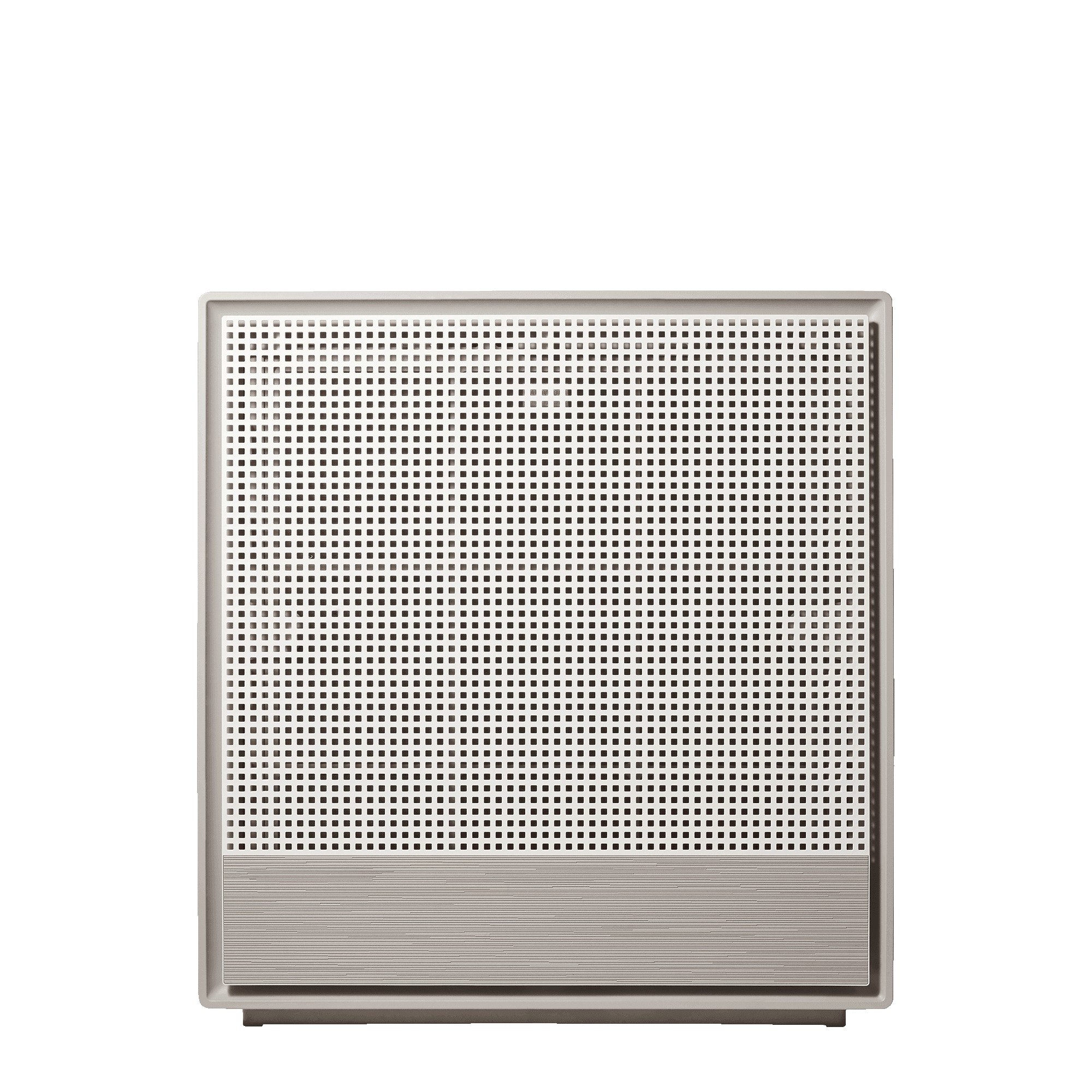
We bought one of these in March, on the second straight week of wildfire smoke that turned the sky outside our apartment a shade of orange I'd previously seen only in disaster movies. I expected it to be loud, ugly, and ineffective for the first 48 hours, and then to settle into a routine where I'd argue with myself about whether it was actually doing anything. Two months later, none of those things have happened.
The first thing it gets right is the sensor. There's a small light on the front that glows blue when the air is clean, purple when it's middling, and red when it's bad. The first time I cooked salmon in the kitchen and watched the light turn red within 30 seconds, I understood what the purifier was actually doing. It is not a placebo running in the corner. It is a machine that responds, in real time, to the air it's pulling in, and the fan ramps up and down accordingly. I have caught it spinning up after my partner sprayed perfume in the next room, which is the kind of thing that builds trust quickly.
The fan is the second win. On the lowest two settings — which is where it spends 90% of its time in our apartment — it is quieter than the refrigerator. We have it in the bedroom and I sleep through it with no notice. On the highest setting it gets loud, but the highest setting is reserved for the kind of acute event (wildfire day, burnt dinner, contractor sanding drywall) where you want it loud.
Filtration is the standard HEPA-plus-carbon stack. Coway rates it for around 930 square feet at the lower of the two standard refresh rates, which lines up with what I've seen in our 700-square-foot living-and-kitchen area. The carbon stage handles cooking smells better than the cheaper Levoits I've used in previous apartments; the kitchen still smells like dinner an hour later, but not the next morning.
The filter replacement schedule is the place where the costs hide. Coway wants you to replace the HEPA filter once a year and the carbon pre-filter every six months. At about $80 a year in filters, it's not catastrophic, but it's not nothing, and the app will not let you ignore the indicator light no matter how much life the filter actually has left. Generic-brand replacements exist and work fine; I've stopped buying the genuine ones.
The app is fine, in the lowest sense of the word. It connects to Wi-Fi, lets you change modes from your phone, and shows you a graph of your air quality over the day. It also requires a Coway account, occasionally needs to be reset, and crashes more often than software in 2026 should. None of this matters if you set it on auto and walk away, which is what I do.
Design-wise, the 250 is a beige-white tower with a perforated front grille. It is not ugly, exactly, but it is firmly in the appliance category and not the furniture category — if you want an air purifier that doubles as decor, the Molekule or the Dyson are still the things to buy, at substantially higher prices and, in Molekule's case, worse actual filtration.
Verdict: Buy this if you want a quiet, effective air purifier for a real-sized room and you don't want to think about it once it's plugged in.