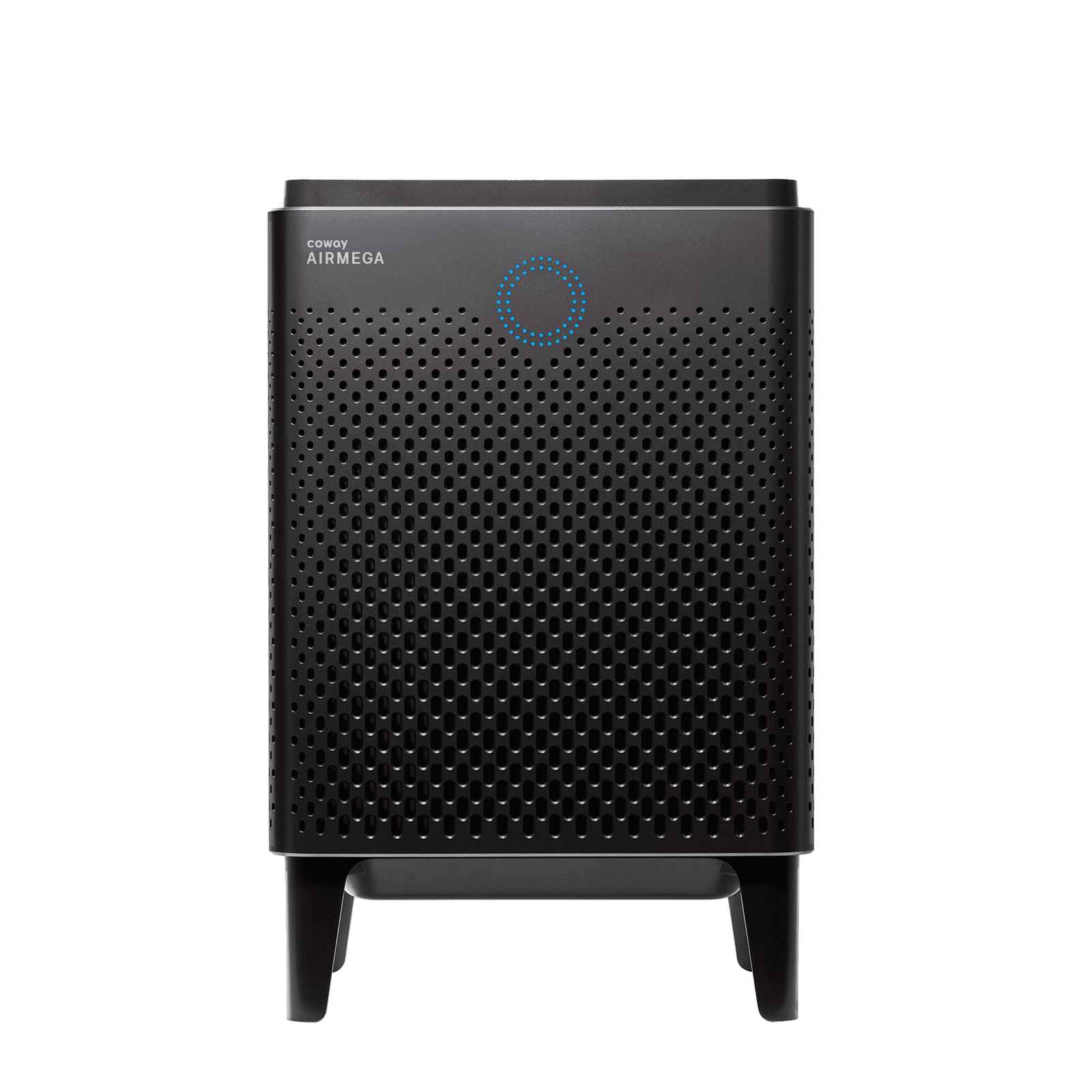
I live in a 900-square-foot open-plan apartment where the kitchen flows into the living room with nothing but a counter to slow down the cooking smells. The night I brought the Airmega 400 home, I put it in the corner by the dining table, set it to auto, and seared a ribeye. By the time the steak hit the resting board, the purifier had spooled up from sleep mode to high on its own. By the time I sat down to eat, the light on the top had already cycled back to blue. That moment sold me on the smart sensors. Three other purifiers I'd owned had "auto" modes that were either always on full blast or always on low; this is the first one where the auto mode behaved like a thinking thing.
The coverage claim is real. Coway rates it for over 3,000 square feet, which is marketing math (one air change per hour), but at the more honest four-to-five-air-changes pace it is still good for around 600 to 800 square feet of meaningful cleaning. In my open plan it has no trouble keeping the entire main floor in the green. The dual filter sets — true HEPA on both sides, with pelleted carbon — are the right design for a big room: more surface area, less restriction, quieter at any given CFM than a single-sided purifier pushing the same air.
The energy efficiency is the under-told story. On high it pulls about 60 watts. I left it running 24/7 for a year and the math worked out to roughly thirty dollars in electricity. That is a remarkable number for something moving this much air; my last purifier was half the size and used more power.
Sleep mode is genuinely quiet. The published 23 dBA measurement matches my experience — I sleep with the bedroom door open and the Airmega in the living room, and I have never noticed it from bed. On turbo it is loud the way a box fan is loud, which is fine for the ninety seconds you actually need turbo.
The two real complaints are size and price. This is a 23-inch-tall slab with intake panels on both sides, and it needs floor space around it to breathe. I have it tucked between a chair and a bookcase with about four inches of clearance, and it is fine, but it is not furniture and there is no pretending otherwise. The $400 to $700 sticker is also a lot of money — for a smaller room, the Levoit Core 600S is half the price and will keep up.
The base model has no app, which I thought would bother me and never has. The physical controls are good, the auto mode is smart, and I do not want a phone in the loop for something that already knows when I am cooking. If you want Wi-Fi, the S variant exists for about a hundred more.
Filters run about $129 a year, which is higher than the small-purifier average and exactly what you'd expect for moving four times more air. The carbon is pellet rather than impregnated fabric, which is the right call for a unit at this price.
Verdict: Buy this if you have an open floor plan or a single room over 600 square feet and you actually want the air clean fast. If your biggest room is a bedroom, save the money and get a Levoit.