I bought the TP10 the August my air conditioner died and the pollen count refused to drop. I needed a fan, I wanted to stop sneezing, and I had about a week before guests arrived to inherit my second bedroom. The TP10 is the only product I could find that did both jobs in one shape, and that turns out to be the whole pitch.
In fan mode it is the Dyson you remember from every airport display: a tall hoop on a stick, no visible blades, smooth steady airflow that you can aim with 350 degrees of oscillation. As a fan it is good — quieter than a box fan at comparable airflow, and the bladeless design means no dust scallops on a grille to clean. As a purifier it is, well, a small-room purifier. Roughly 100 square feet of meaningful coverage, which means it handled the bedroom and would have been laughable in the living room.
Within its room it works. The HEPA H13 is fully sealed, which is the important spec — a lot of cheaper purifiers leak around the filter and undo their own work, and the Dyson does not. After a day of running it on auto in the bedroom, my morning sneeze count went from "upsetting" to "normal," which is the only metric I cared about. The on-unit air-quality light, which I had assumed was decoration, actually responded to the bedside diffuser when I turned it on.
The magnetized remote is the small detail I would not have predicted loving. It snaps to the top of the unit so it does not vanish into a couch cushion, which is the eternal fate of every other remote control I have owned. The night mode dims the display and drops the fan to its quietest speed, and the auto shut-off timer (1, 2, 4, or 8 hours) is enough scheduling to replace the app I do not have.
The lack of an app is the headline trade. Dyson reserves Wi-Fi and the Link app for the pricier TP07 and TP09. That feels like a markup on a feature that should be free at $323, and if smart-home integration matters to you, the TP10 is the wrong Dyson. The on-unit display also doesn't show a numeric air-quality reading — just a colored bar — which is fine until you want to know what is actually happening.
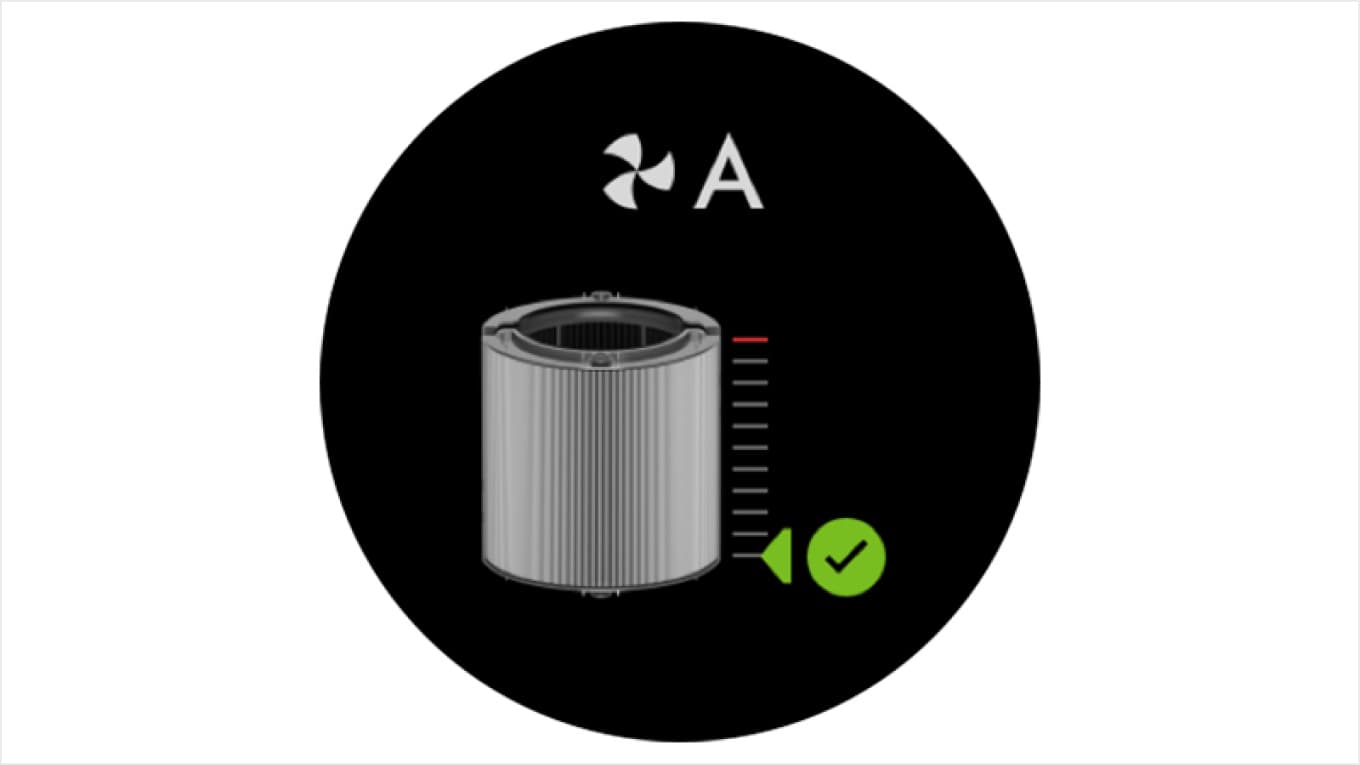
Filter costs are Dyson-priced, by which I mean higher than I would prefer. The filter is a combined HEPA-and-carbon cartridge that snaps in, and replacements run around eighty dollars at the cadence Dyson recommends. None of this is a surprise from the brand whose vacuum bags also cost more than other vacuums' vacuums.
The one thing I have come around on is the form factor. At ten pounds it moves between rooms easily, and the footprint is a circle the size of a dinner plate. In a small apartment that matters more than I thought it would; I do not love floor purifiers, and this one tucks behind a chair without looking like infrastructure.
Verdict: Buy this if you live in an apartment and you want one device that purifies a bedroom and replaces a fan. If you want coverage above 150 square feet or app control, step up to the TP09 or skip Dyson and buy the Levoit 600S.