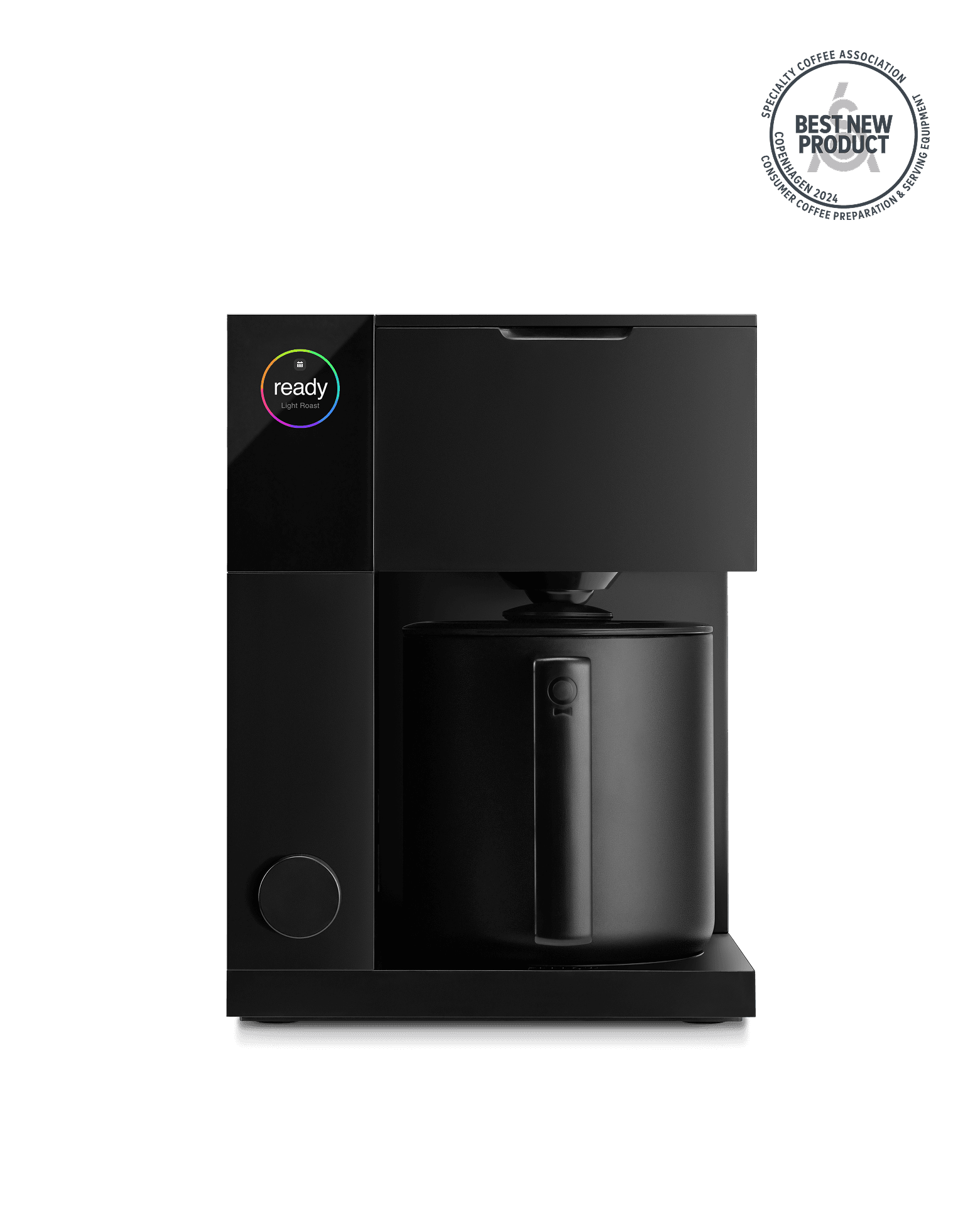
I made pour-over by hand every morning for three years. A gooseneck kettle, a scale, a timer on my phone, a fifteen-stage choreography before I'd had any caffeine. The Aiden replaced all of it on a Tuesday in February and I have not picked the kettle back up since.
What the Aiden does that no other drip machine does is let you program the brew like a recipe. Water temperature is adjustable from 50 to 99 degrees Celsius and you can stage it across phases — start at 93, drop to 88 for the back half, which is the kind of thing you'd do manually for a medium-roast Ethiopian and would never bother to do with a Mr. Coffee. The shower head spreads water evenly across the bed instead of cratering a hole in the middle, which is the single biggest reason most drip machines extract unevenly. I weighed and refractometered a few shots out of curiosity in the first week and they came in around 20 percent, which is pour-over territory and not what I was expecting from a button-press.
The app is where the experience starts to wobble. You can build profiles per bean, schedule a 7 a.m. brew, share recipes with other Aiden owners. That sounds great until you realize the app demands you re-log-in and re-grant Bluetooth permissions every single session, which over a month of mornings becomes its own small grief. The on-machine interface is a single click-wheel that's fine for choosing a profile and tedious for typing in the name of one. I do most of my actual setup on the app and most of my actual brewing from the wheel.
The build is the other piece that doesn't match the price. Four hundred dollars buys a mostly plastic machine with a reservoir lid that flexes when you lift it. The carafe is intentionally not heat-retentive (Fellow's reasoning is that holding coffee on a hot surface scorches it, which is correct), but in practice that means the cup you pour fifteen minutes after brew is noticeably cool. And there's a concentration gradient inside the carafe — the bottom is denser than the top — so you genuinely have to stir before pouring or the first cup tastes thin and the last tastes burnt.
One more annoyance I want on the record: if I close the lid after a brew and don't air it out, by the next morning there's a faint mildew smell from the trapped condensation. I now leave the lid cracked overnight. This should not be a thing on a four-hundred-dollar appliance.
The Moccamaster across the room costs less, has a five-year warranty, and will outlast this machine by a decade. What it won't do is let me change the water temperature mid-brew, or schedule itself for sunrise. That's the trade.
Verdict: Buy this if you've been doing pour-over by hand and you're ready to delegate, and you can live with software that's still catching up to the hardware. If you want a machine you'll still own in 2046, get a Moccamaster.