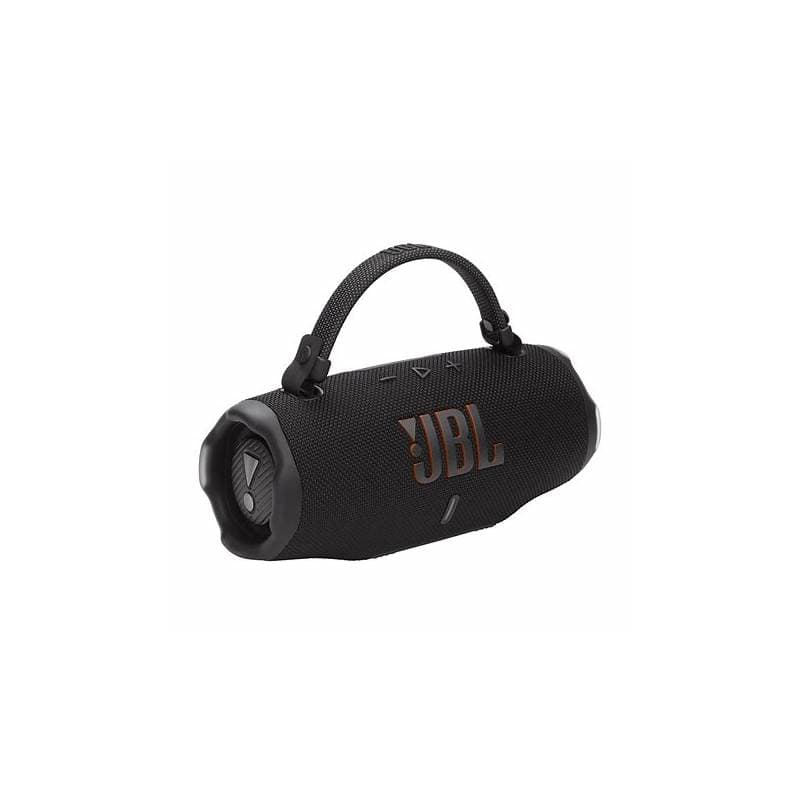
I dropped mine on a concrete patio in the second week, from about hip height, and it bounced and kept playing. That was the moment I stopped treating the Charge 6 like a piece of electronics and started treating it like a tool. The IP68 rating means you can submerge it. The thicker rubber bumpers — four of them now, where the Charge 5 had three — mean you can drop it. I have done both, not on purpose, and the speaker has not noticed.
What JBL got right is the combination of price and survivability. Two hundred dollars is the magic number for a portable, and at $199 the Charge 6 is the easiest yes in the category for most people. The sound is good for the size — strong, slightly bass-forward, more than loud enough for a backyard. The new 7-band custom EQ in the app means you can actually fix the default tuning if you don't love it, which is a real step up from the 3-band EQ on the Charge 5. And the 10-minute quick charge yielding two and a half hours of playback is the kind of feature you don't appreciate until the speaker dies fifteen minutes before guests arrive.
The sleeper upgrade is USB-C audio. Plug a laptop or a DAC into the back and the Charge 6 will play lossless without the Bluetooth bottleneck — the first time a Charge has done that. I don't use it often, but the one time I sat at my desk and listened to an album through it as a wired speaker, the difference was obvious. It is a real feature, not a checkbox.
Now the asterisks. JBL claims 24 hours of battery. I measured something closer to 13 at the kind of volume a person actually uses outdoors, which lines up with what independent reviewers have found. Playtime Boost will get you closer to the marketing number, but it does so by squashing the bass, which defeats the point. There's no microphone, so it's not a speakerphone. There's no Wi-Fi, so it's not part of any multi-room system. There's no AUX in, which I noticed the moment my partner's old iPod showed up at a barbecue.
The other thing worth knowing if you already own JBL speakers: the move from Party Boost to Auracast is a one-way door. Your old Flips and Charges will not pair with this one. If your collection of JBLs is your speaker strategy, the Charge 6 either restarts that collection or doesn't fit it.
The Bose SoundLink Max at $400 sounds noticeably better and is more rugged-feeling, but it costs twice as much and weighs three times more. For the speaker you actually take to the beach, the Charge 6 is the right answer.
Verdict: Buy this if you want one good portable and you don't want to think about it. If you need stereo or smart-home integration, look at something with Wi-Fi instead.