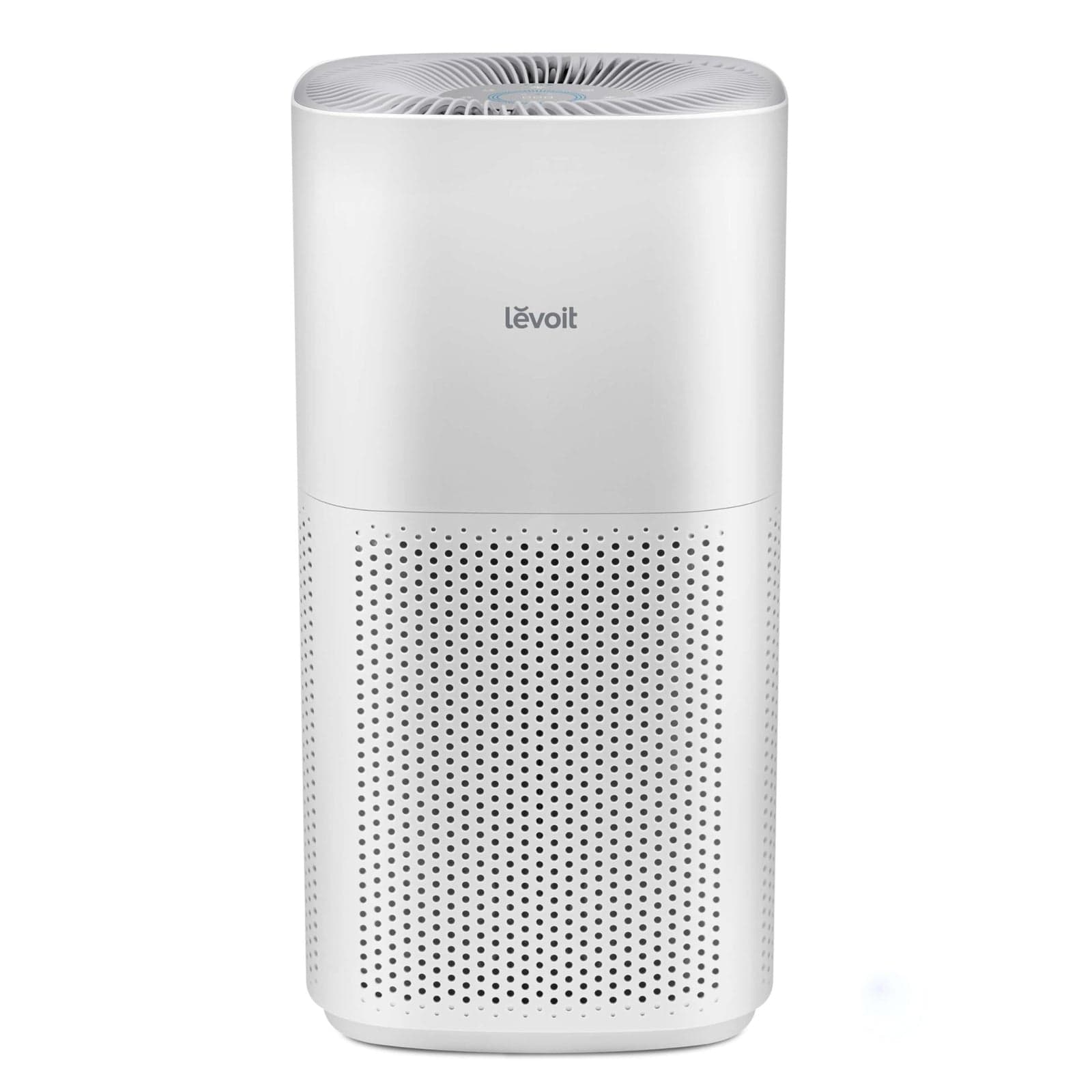
I bought the Core 600S as the upgrade from a much smaller Levoit that had been wheezing along in my living room. The 600S arrived on a Tuesday, I plugged it in, and by Tuesday night the VeSync app on my phone was showing me a graph of how the PM2.5 in my apartment had spiked when I cooked dinner and then trailed off in a slow curve over the next forty minutes. That graph is, honestly, the reason to buy this purifier over a more expensive one. The app is not the polished masterpiece nobody in the category has built yet, but it works, the auto mode is genuinely smart, and the data is real enough to be useful.
The performance is strong for a $250 purifier. A 562-square-foot coverage rating that actually holds up in a 500-square-foot living room, three-stage filtration with an activated-carbon layer, and a particle CADR in the 375 range that puts it within striking distance of the Coway Airmega 400 at half the price. The light sensor auto-sleep is the kind of small touch you notice on day three: when I turn the lights off at night, the unit's display dims and the fan steps down to its quietest setting without me asking.
The "HEPA" branding asterisk is worth being upfront about. Levoit quietly stopped using the True HEPA mark in marketing in 2023 — the filter itself appears unchanged, the measured performance is unchanged, but legally they no longer make the claim. Whether that bothers you depends on how you feel about marketing language. The captured-particle results in independent testing are still in the 95-plus-percent range for the sizes that matter, and that has not changed.
The complaint that has changed my behavior with the unit is the noise on turbo. In quiet mode and on auto, it is bedroom-friendly — I sleep with it ten feet from my bed and never notice. On turbo, it hits 62 to 68 dB depending on whose measurement you trust, and that is the noise of a vacuum cleaner you are trying to ignore. During high-pollen days when I want maximum cleaning, I have learned to run it on turbo only when I am leaving the apartment. If you have a baby's room, a home office, or any situation where you cannot leave during turbo, this matters.
The filter is a single bonded cylinder — pre-filter, particle filter, and carbon, all glued into one assembly. When the carbon dies, the HEPA dies with it, and you replace the whole thing for about $60. This is a cost-control move, not a feature, and it means you cannot keep the HEPA running while just swapping the carbon. Annual filter cost works out to around $130 if you actually replace it on schedule.
The two carrying handles on the sides are the thing that has surprised me most. A 13-pound purifier should not need handles, but it does, and I use them every time I move it. The Coway has nothing comparable and you regret it the first time you have to relocate it.
The other small annoyance: the silver control panel washes out in direct sunlight, which is the only situation in which I have ever wanted to look at the control panel.
Verdict: Buy this if you want a smart purifier for a living room or large bedroom and you can keep it on auto. If you need it in a bedroom on turbo, get the Coway Airmega 400 and put up with the larger footprint.