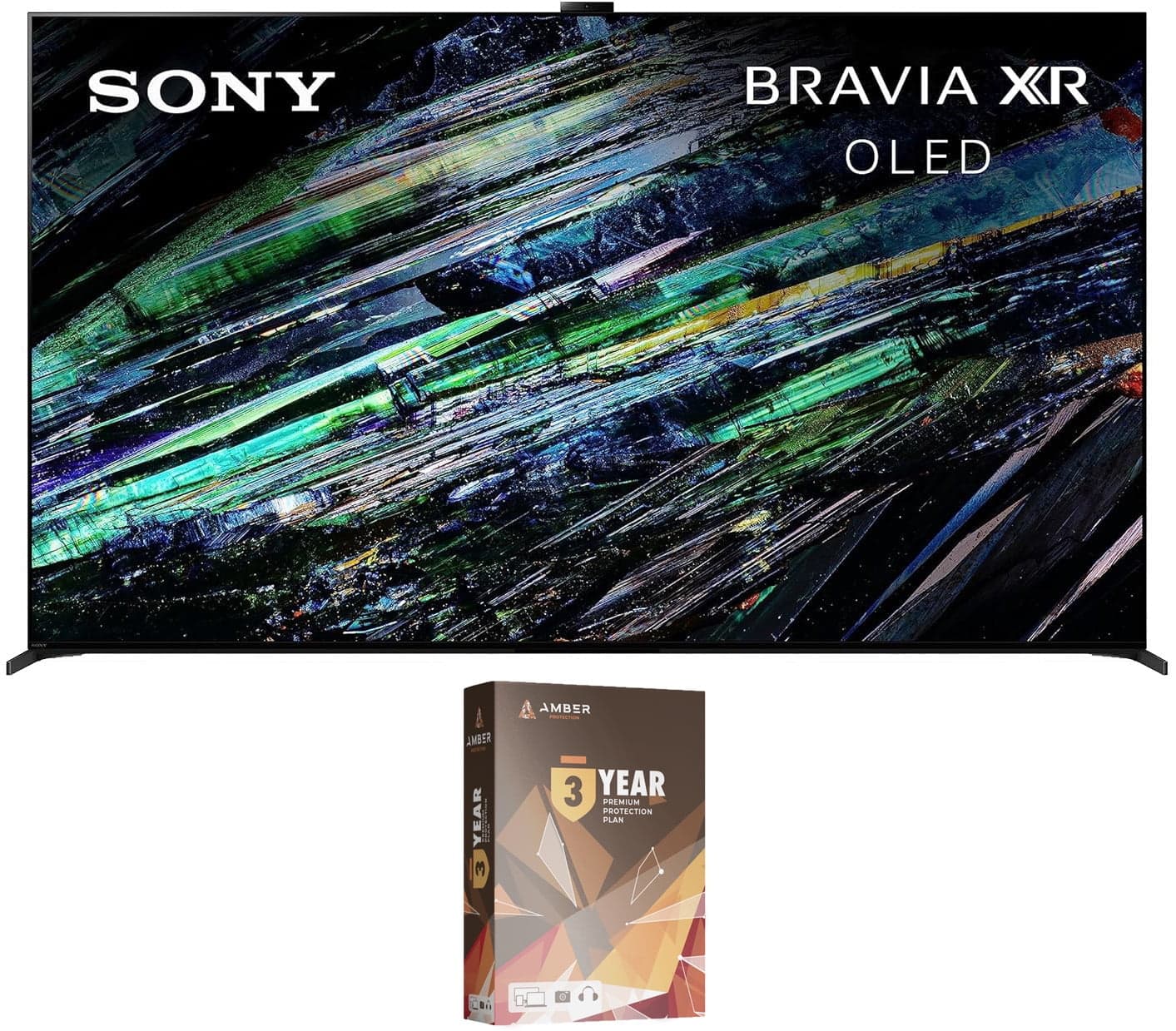
I borrowed an A95L for a long weekend before buying one, and the moment that pushed me from "interested" to "buying" was a scene from a Blu-ray of Blade Runner 2049 — the daylight desert sequence with Joi appearing in the orange dust. On my older LG it had been a beautiful scene. On the A95L, the orange dust had layers I hadn't seen, like sand suspended in light, and the line between Joi's hologram and the actual environment had a depth that made me sit forward. That is the Cognitive Processor XR doing what every reviewer keeps saying it does. It is the reason this TV looks better than every other OLED I've put it next to.
The panel measures around 1,507 nits HDR peak on a 5% window, paired with perfect 0.0001 nit blacks — which is the spec way of saying it handles the brightest highlights and the deepest shadows in the same scene, simultaneously, without compromise. Color sits around 100% of DCI-P3 and close to 90% of BT.2020. These are the numbers the OLED ceiling lives at, and the A95L hits them.
Where Sony pulls away from LG and Samsung is in processing. The Cognitive Processor XR's upscaling on sub-4K content is the best in the category, by a margin you can see without trying. I watched a 1080p stream of an old NBA finals on it and the grain and the crowd handled with a clarity that didn't look algorithmically sharpened. It looked like 1080p done correctly, which is harder than 4K done well.
The Acoustic Surface Audio system — the panel itself vibrates as the speaker, with mid and tweeter actuators behind the glass — sounds better than any flat-panel built-in audio I've heard. Not soundbar-replacing for movies, but for nightly news and dialogue-driven shows it's good enough that I leave the soundbar off during the week.
The complaints are real and you should know them before paying $3,500 for a 65-inch TV. Only two of the four HDMI inputs support 4K at 120Hz, and one of those two is also the eARC port for the soundbar — so if you have a PS5, an Xbox, an Apple TV 4K, and a soundbar, you're choosing which two get the good ports. For a flagship, this is genuinely silly. The Samsung S95C gives you four HDMI 2.1 ports at less money, and if you're a multi-console household that's a tipping factor.
Minor QD-OLED color fringing at edges is inherent to the panel tech and visible if you go looking. In actual content I've never noticed. Google TV is fine, ad-laden in the home screen, and faster than it used to be.
The price is the price. At $3,499 for the 65-inch, this is the most expensive per inch you'll buy this year. There's no way to argue around that. The question is whether the picture is worth it, and for me, after a few months with it, the answer became yes — but I am a person who cares about picture processing more than the average buyer should be expected to.
Verdict: Buy the A95L if picture quality is the line item you'll never regret overspending on. If you have more than two devices that need 4K/120, the Samsung S95C is the better bought.