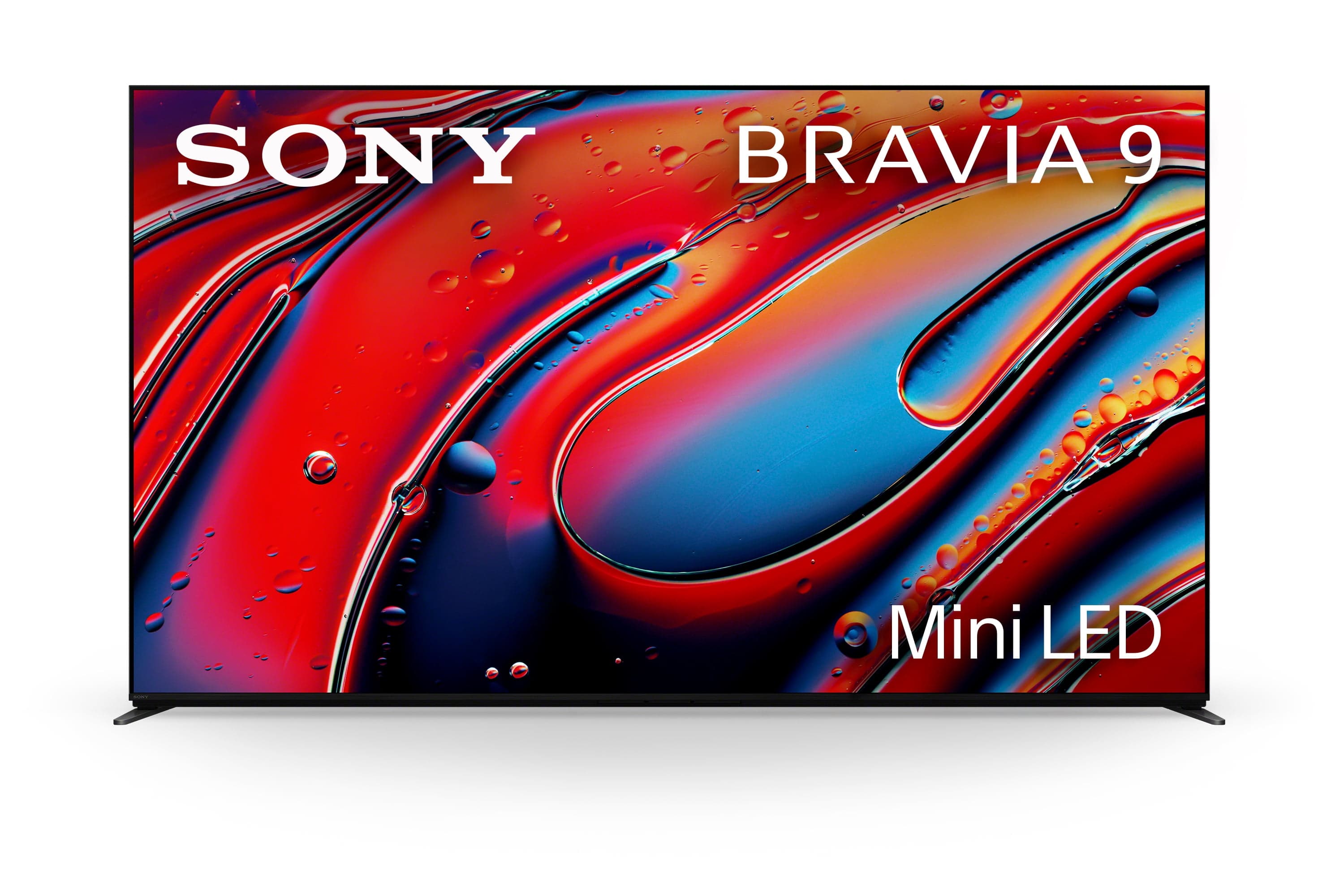
The Bravia 9 went on the wall in our south-facing main room, replacing an LG OLED that had been making me squint at lunchtime for two years. The first weekend with the Bravia 9 I watched a daytime football game without closing any blinds for the first time since I'd moved in. That sounds small. It changed the way I use the room.
The panel hits around 2,440 nits peak HDR on an 18% window, driven by XR Backlight Master Drive across roughly 1,920 dimming zones on the 75-inch. The combination of bright peaks and granular dimming is the thing Mini-LEDs have been chasing for years; on cheaper sets you get the brightness but the blooming around bright objects on dark backgrounds is distracting. On the Bravia 9, blooming is the closest thing to absent I've seen on a backlit panel. Watching letterboxed movies, the black bars stay black; the credits at the end of a scene don't halo into the surrounding void.
The X-Anti Reflection coating is the under-talked-about feature. It's not as aggressive as Samsung's matte treatment on the S95D, but it cuts hot reflections from windows and lamps to a degree I'd previously only seen on the Frame. The picture stays the picture in a bright room.
Sony's processing on this thing carries the same DNA as the A95L — natural color, restrained sharpening, motion handling that doesn't soap-opera the cinema content. After a week I'd stopped fiddling with picture modes and just left it in Cinema. Dolby Vision content looks the way it should look. Dolby Atmos through the 70W 2.2.2 onboard audio is surprisingly capable, with real height information from the up-firing channels.
The Achilles heel is the thing OhHiFi and everyone else flagged: only two HDMI 2.1 ports, and one of those is also eARC. On a $3,300 flagship in 2026, this is genuinely irritating. My household has a PS5, an Apple TV 4K, an Xbox, and a soundbar. Math that out and somebody is plugging into a HDMI 2.0 port and losing 4K/120. The workaround is an HDMI switcher, which feels like an absurd accessory to need for a TV at this price.
Google TV is fine, sometimes sluggish in a way that suggests the processor is undersized for the OS. The remote is the new backlit USB-C one and is actually pleasant to hold, which is a sentence I never thought I'd write about a TV remote.
Early firmware caused backlight fluctuations that the AV forums complained about loudly; Sony patched these, and the current firmware I'm on has been stable. If you buy a unit that was sitting on a shelf for a year, run the update before judging it.
The pricing puts it in awkward territory. At $3,300 MSRP for the 65-inch, you're paying close to A95L money for a Mini-LED. The reason to make that choice is the room — if your space defeats OLED, the Bravia 9 wins by being able to live there. If your room is dim, the A95L is the better picture for the same dollar.
Verdict: Buy the Bravia 9 if your living room defeats OLEDs and you don't need more than two HDMI 2.1 ports. Multi-console gamers should look at the LG C4 or Samsung S95D instead.